
Austrian GP Power Unit Upgrade Explained: What Ferrari's F1 Engine Tells Your Street Build
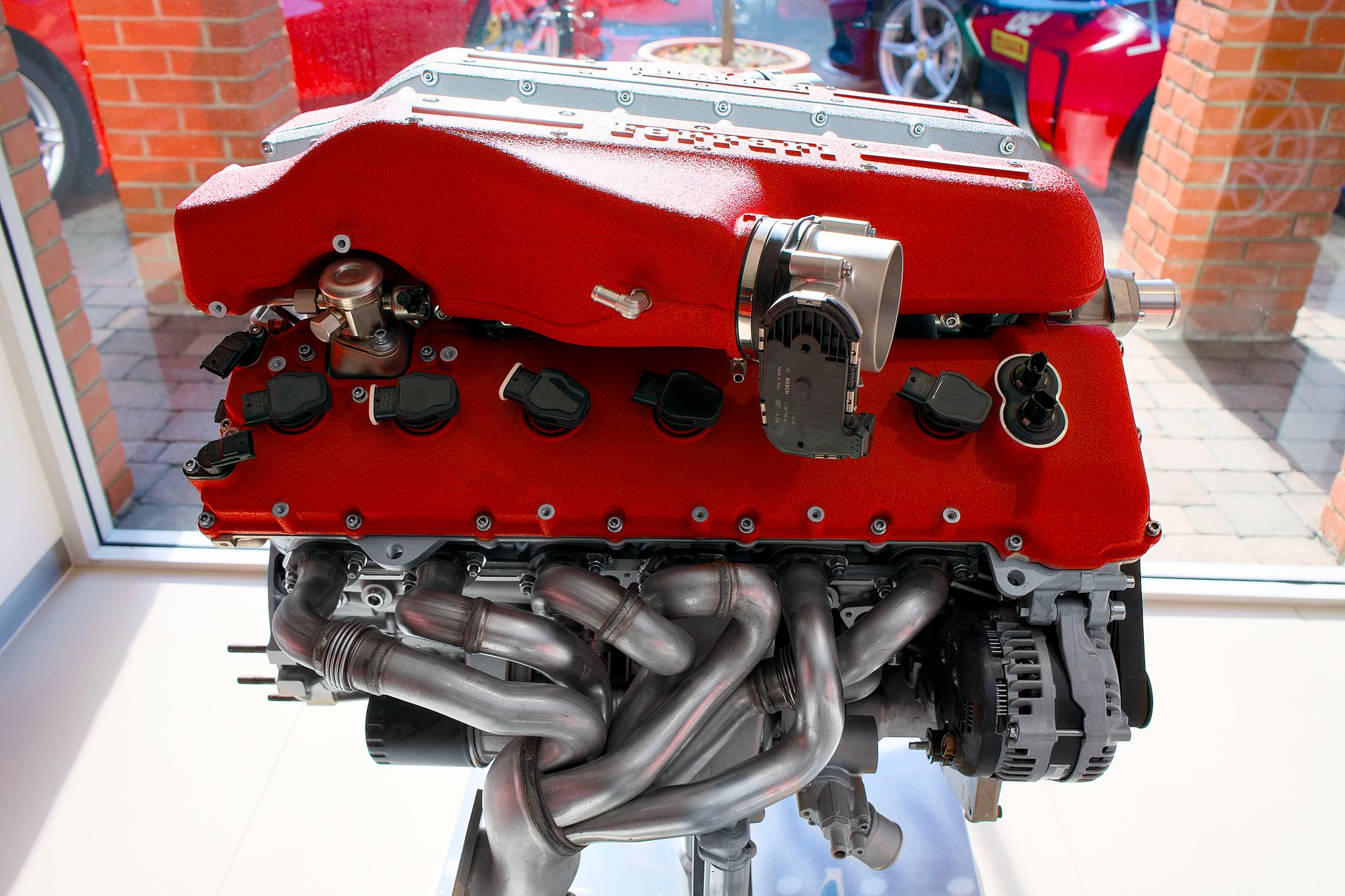
The 2026 Formula 1 season is rewriting the rulebook on what “power unit” actually means. With the new chassis regulations forcing teams to chase efficiency over raw displacement, Ferrari’s latest move at the Red Bull Ring isn’t just paddock gossip—it’s a masterclass in systems-level thinking that translates directly to your garage. The Best Performance Mods for Your New Car might start with bolt-ons, but as teams like Ferrari prove, the real gains come from understanding how components talk to each other. That’s why the Austrian GP power unit upgrade explained matters for anyone serious about going faster, whether you’re chasing lap times at Road America or dialing in a daily driver.
The Austrian GP Power Unit Upgrade Explained: What Ferrari Actually Changed
Ferrari brought their second-specification ICE (Internal Combustion Engine) to Spielberg for the 2026 Austrian Grand Prix, and the details reveal where F1 engineering intersects with street performance philosophy. Here’s the breakdown of what’s different from the season-opening Bahrain spec:
- Revised combustion chamber geometry: Shorter piston crown with optimized squish areas, raising thermodynamic efficiency by a reported 1.8%—not headline-grabbing in isolation, but cumulative with the MGU-H harvest improvements
- Turbocharger compressor wheel redesign: 3mm larger inducer diameter with revised blade curvature, shifting the efficiency island to match Austria’s high-altitude demands (2,000+ ft elevation at the Red Bull Ring)
- MGU-K torque delivery remapping: Smoother deployment below 120 km/h to protect the rear tires on Pirelli’s softest compounds
The key insight? Ferrari didn’t chase peak power. They optimized the operating window. This mirrors the smartest approach to street builds: a 500 hp car with a 4,000 rpm-wide torque plateau outperforms a 600 hp peaky engine on real roads.
From F1 Pit Lane to Your Dyno: Three Tuning Principles
Altitude Compensation Isn’t Just for Mountain Runs
Ferrari’s compressor wheel change specifically addresses the 6-8% air density loss at Spielberg. Street turbo owners at elevation—think Denver, Salt Lake City, or anywhere in the Mountain West—face identical challenges. Most off-the-shelf turbo kits assume sea-level density. The fix:
- Upgrade to a boost controller with barometric compensation (COBB, Haltech, or standalone EMS)
- Target 18-20% more boost per 1,000 ft above sea level to maintain mass airflow, not just pressure
- Retard ignition timing 0.5-1° per 1,000 ft to prevent knock when the ECU’s default knock threshold becomes optimistic
Thermal Management as Power Modification
Ferrari’s revised combustion chamber isn’t about bigger bangs—it’s about where heat goes. More work to the piston, less to the cylinder walls. For street builds, this translates to:
- Oil temperature targets: 110-120°C (230-248°F) for synthetic 5W-40, where viscosity stabilizes but breakdown hasn’t accelerated
- Intercooler efficiency above core size: A well-ducted, smaller air-to-water intercooler outperforms a massive air-to-air unit with lazy airflow
- Header wrap vs. ceramic coating: F1 teams use neither—targeted insulation blankets on specific runners. For street cars, ceramic coating the first 18 inches of primary tubes maintains exhaust velocity without the corrosion risk of wrap
The “MGU-K Effect” on Street Throttle Mapping
Ferrari’s revised torque delivery below 120 km/h isn’t about limiting power—it’s about usable power. Your throttle body and pedal mapping accomplish the same thing:
- Linear throttle bodies (65-75mm) vs. oversized (90mm+): Bore size determines tip-in sensitivity more than peak flow
- Progressive pedal maps in standalone ECUs: Start with 60% actual throttle at 80% pedal input, ramping to 100% only in final 10%—this mimics Ferrari’s tire-protection strategy and transforms drivability in RWD street cars
- DBW (Drive-by-Wire) throttle plate dithering: Factory calibration often adds 2-3% oscillation for emissions; aftermarket ECUs can lock this out for crisp response, but require careful idle tuning
Why This Upgrade Timing Matters for Your Build Calendar
Ferrari introduced this spec at Round 9, not Round 1. That’s deliberate. F1’s 2026 power unit regulations limit teams to three ICEs, three turbos, and two MGU-Ks per season. Introducing a major revision mid-season means accepting grid penalties later or proving reliability in compressed timeframes.
For your street build, the parallel is mod sequencing:
| Phase | F1 Equivalent | Street Build Action |
|---|---|---|
| Foundation | Winter testing baseline | Maintenance, cooling, brakes |
| Validation | Early-season races | Data logging, knock detection, AFR verification |
| Optimization | Austria-style spec introduction | Hardware changes with proven software support |
| Preservation | Season-end conservation | Seasonal storage, corrosion prevention, seal conditioning |
Jumping to Phase 3 without Phase 2 data is how street builds end up with blown head gaskets and mysterious detonation. Ferrari’s patience is instructive.
The Hybrid Connection: What 2026 F1 Means for 2027 Street Builds
The 2026 F1 regulations mandate a 50/50 split between ICE and electrical power deployment—far beyond current street hybrids. But Ferrari’s Austrian upgrade includes MGU-H (turbine-integrated generator) software that harvests during overrun and redeploys strategically.
Street-relevant takeaways:
- Mild hybrid systems (48V BSG/ISG) are becoming tuneable: New platforms from BMW, Mercedes, and even some Ford PowerBoost trucks have harvest/regen logic that can be remapped
- Turbo lag mitigation via electrical assist: The 2026 Ferrari spools its compressor electrically below 80,000 rpm turbine speed. Your 48V e-turbo (Audi, some AMG variants) uses identical principles—tuning focuses on electrical torque fill duration, not just boost threshold
- Energy storage as power buffer: F1’s 4 MJ battery limit forces strategic deployment. Street PHEVs with 15+ kWh packs can use “charge sustain” modes that effectively serve as rolling anti-lag—tune the ICE to lag intentionally, then fill with motor torque for transient response
Conclusion: Reading the Austrian GP Power Unit Upgrade as a Build Blueprint
The Austrian GP power unit upgrade explained isn’t just F1 trivia—it’s a compressed case study in systems engineering. Ferrari’s choices at Spielberg emphasize that modern performance lives in integration, not isolation. The combustion chamber talks to the turbo, the turbo to the electrical system, the electrical system to the tires, and the tires to the lap timer.
For your next build, whether it’s a Coyote-swapped F-150, a B58 BMW, or a forced-induction LS project, the questions shouldn’t start with “what’s the biggest turbo?” They should start with “what’s my operating window, and how do all components serve it?” The teams winning in 2026 F1 have already answered this. Your garage is next.