
Performance Chip vs ECU Tune: The 2026 Guide to Choosing the Right Path
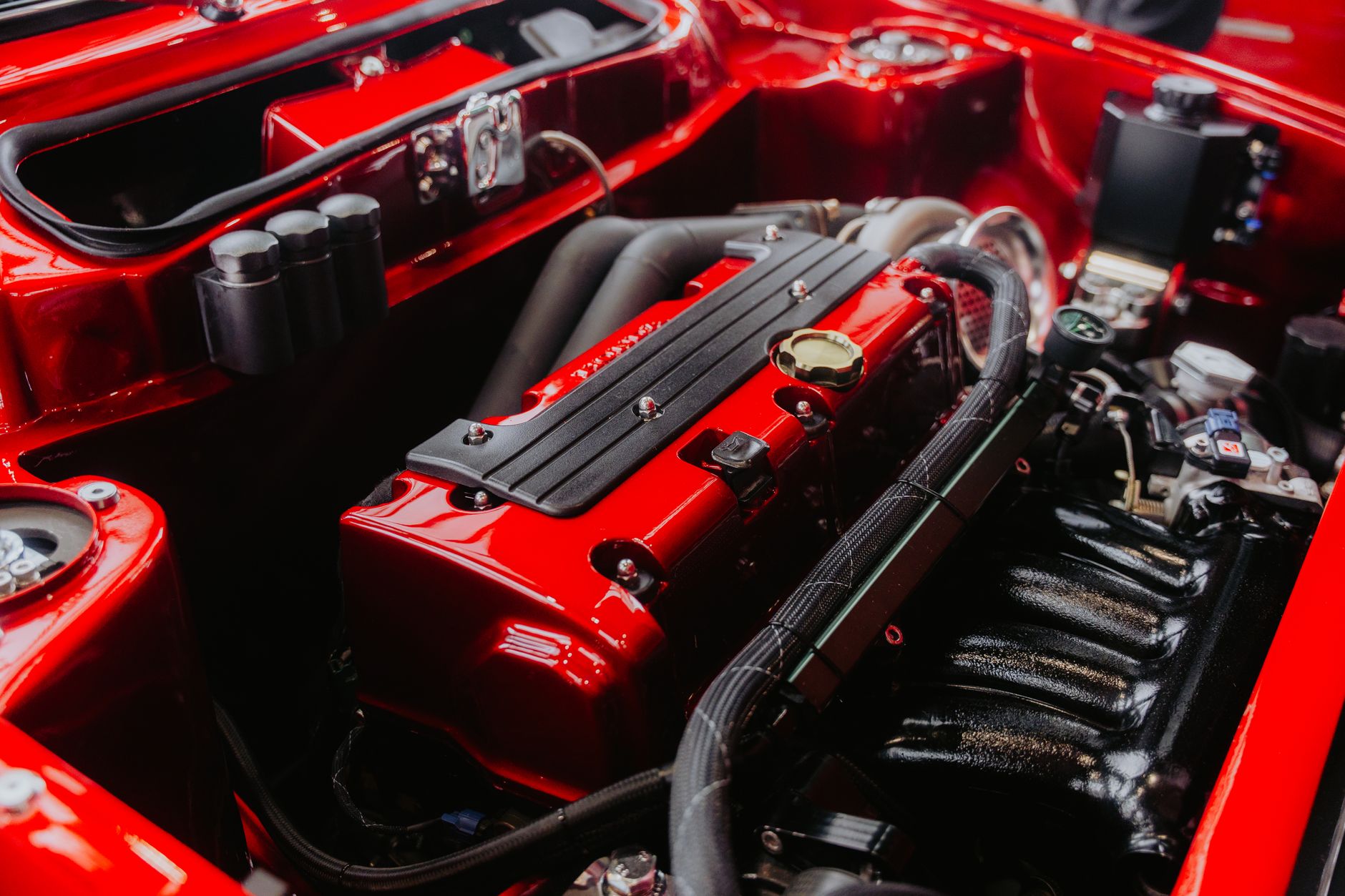
If you’ve spent any time on car forums or YouTube lately, you’ve noticed something: tuning is more accessible than ever. Between the explosion of plug-and-play modules, the rise of remote tuning services, and manufacturers cracking down on aftermarket software with encrypted ECUs, the question of performance chip vs ECU tune has never been more relevant — or more confusing. With 2026 bringing tighter emissions enforcement and more sophisticated factory engine management systems, picking the wrong path can cost you money, void your warranty, or leave power on the table.
Let’s cut through the noise. This guide breaks down exactly what each option does, what it costs, and which one actually makes sense for your build.
What Is a Performance Chip?
A performance chip — sometimes called a “piggyback module” or “tuning box” — is a small electronic device that intercepts signals between your engine’s sensors and the factory ECU. It modifies those signals to change parameters like fuel delivery, boost pressure, or throttle mapping without ever rewriting the factory software.
Here’s how it works in practice:
- Installation is simple. Most chips plug directly into your OBD-II port or splice into sensor wiring. No laptop, no dyno, no downtime.
- The factory ECU stays untouched. Your original software remains intact, which means the chip can be removed before dealer visits.
- Gains are modest. Expect anywhere from 10 to 30 horsepower on a naturally aspirated engine, and up to 40-50 hp on a turbocharged application where the chip can manipulate boost signals.
Popular examples in 2026 include modules from brands like RaceChip, DTE Systems, and JB4 (for turbo platforms). They typically run between $150 and $500, depending on the vehicle and feature set.
The appeal is obvious: cheap, fast, reversible. But there’s a ceiling to what a chip can do, and that ceiling matters.
What Is an ECU Tune?
An ECU tune — also called a “flash tune,” “remap,” or “calibration” — involves directly rewriting the software on your vehicle’s engine control unit. Instead of tricking sensors, a tuner modifies the actual maps that control fuel, timing, boost, torque limits, and dozens of other parameters.
There are two main approaches:
- Off-the-shelf (OTS) tunes: Pre-built calibrations from companies like Cobb Tuning, APR, or HP Tuners. These are designed for stock or lightly modified vehicles and cost between $300 and $700.
- Custom dyno tunes: A professional tuner adjusts your specific vehicle on a dynamometer, accounting for your exact mods, fuel quality, altitude, and goals. Expect to pay $500 to $1,500+ depending on the platform and tuner reputation.
The power difference is significant. A quality ECU tune on a turbocharged engine — think a 2025 WRX, a Golf R, or a 6.7L Powerstroke — can unlock 50 to 100+ horsepower over stock. Even naturally aspirated engines see 15 to 30 hp from optimized timing and fuel curves alone.
But here’s the trade-off: flashing your ECU leaves a digital fingerprint. Most modern vehicles log flash counts and calibration IDs. If something goes wrong and the dealer finds an aftermarket tune, your powertrain warranty claim can be denied.
Performance Chip vs ECU Tune: Head-to-Head Comparison
Let’s put them side by side across the factors that actually matter when you’re deciding where to spend your money.
Power Gains
This is where the gap is widest. A performance chip works within the constraints of factory maps — it can nudge parameters, but it can’t fundamentally change how the ECU thinks. An ECU tune rewrites the entire strategy.
For a concrete example: on a 2025 Ford F-150 with the 3.5L EcoBoost, a popular plug-in chip might net you 25-35 hp. A proper ECU tune from a reputable calibrator? You’re looking at 60-80 hp and a meaningful torque increase across the entire rev range, not just at peak.
Cost and Value
Chips win on upfront cost. A $200 module is hard to argue with when a custom tune runs $800+. But value isn’t just about the sticker price — it’s about horsepower per dollar.
Spending $300 on a chip that gives you 15 hp works out to $20 per horsepower. Spending $600 on an OTS tune that delivers 60 hp? That’s $10 per horsepower — half the cost for each unit of gain. The math favors the tune in almost every scenario.
Warranty and Risk
This is the chip’s strongest argument. Because it doesn’t alter factory software, removing it before a dealer visit leaves minimal trace. An ECU flash, on the other hand, is logged in the vehicle’s computer. Some tuners offer “stock file” restoration, but even that can be detected by manufacturer diagnostic tools.
If you’re driving a vehicle still under factory powertrain warranty — especially something like a 2026 model with a 5-year/60,000-mile plan — a chip carries less risk. But “less risk” isn’t “no risk.” Manufacturers have denied claims over piggyback modules too, particularly when they’ve contributed to a failure.
Drivability and Refinement
A quality ECU tune doesn’t just add power — it smooths out throttle response, eliminates factory torque limits, adjusts shift points on automatic transmissions, and can even improve fuel economy under light load. A chip can’t do any of that. It’s working with one or two sensor signals, not the full picture.
Drivers who switch from a chip to a proper tune consistently describe the difference as “night and day” — not just faster, but better integrated, like the car was always supposed to drive that way.
Future Mod Compatibility
Planning to add a cold air intake, downpipe, or intercooler down the road? An ECU tune can be updated to account for those changes. Most reputable tuners offer revised maps as your build evolves. A chip doesn’t adapt — it does one thing, and if your mods outgrow its capabilities, you’re buying a new solution anyway.
Which One Should You Choose?
Here’s the honest breakdown based on where you are right now:
Choose a performance chip if:
- Your vehicle is under factory warranty and you want a low-risk, reversible option
- You’re on a tight budget and want a modest bump in power
- You drive a turbocharged diesel truck and want a quick towing improvement
- You’re not planning further modifications
Choose an ECU tune if:
- You want maximum power from your current setup
- You’re planning additional mods (intake, exhaust, intercooler)
- Your vehicle is out of warranty or you accept the risk
- You care about overall drivability, not just peak numbers
Skip both if:
- Your engine has known reliability issues that tuning would amplify
- You haven’t addressed basic maintenance — worn spark plugs, old coils, or a failing fuel pump will mask any tuning gains
- You’re in a state with strict emissions testing and your tune would remove or disable required equipment
The Bottom Line
The performance chip vs ECU tune debate isn’t really a debate at all once you understand what each tool actually does. A chip is a shortcut — useful in specific situations, but fundamentally limited. An ECU tune is the real thing: more power, better drivability, and a foundation you can build on.
If you’re serious about getting more from your vehicle, save the $200 you’d spend on a chip and put it toward a proper tune from a reputable calibrator. Your dyno sheet — and your right foot — will thank you. And if you’re not sure where to start, look for tuners with proven experience on your specific platform. The right tune isn’t just about numbers; it’s about reliability, refinement, and power you can actually use every day.