
Why a Cheap ECU Tune Before Track Day Is the Smartest $300 You'll Spend in 2026
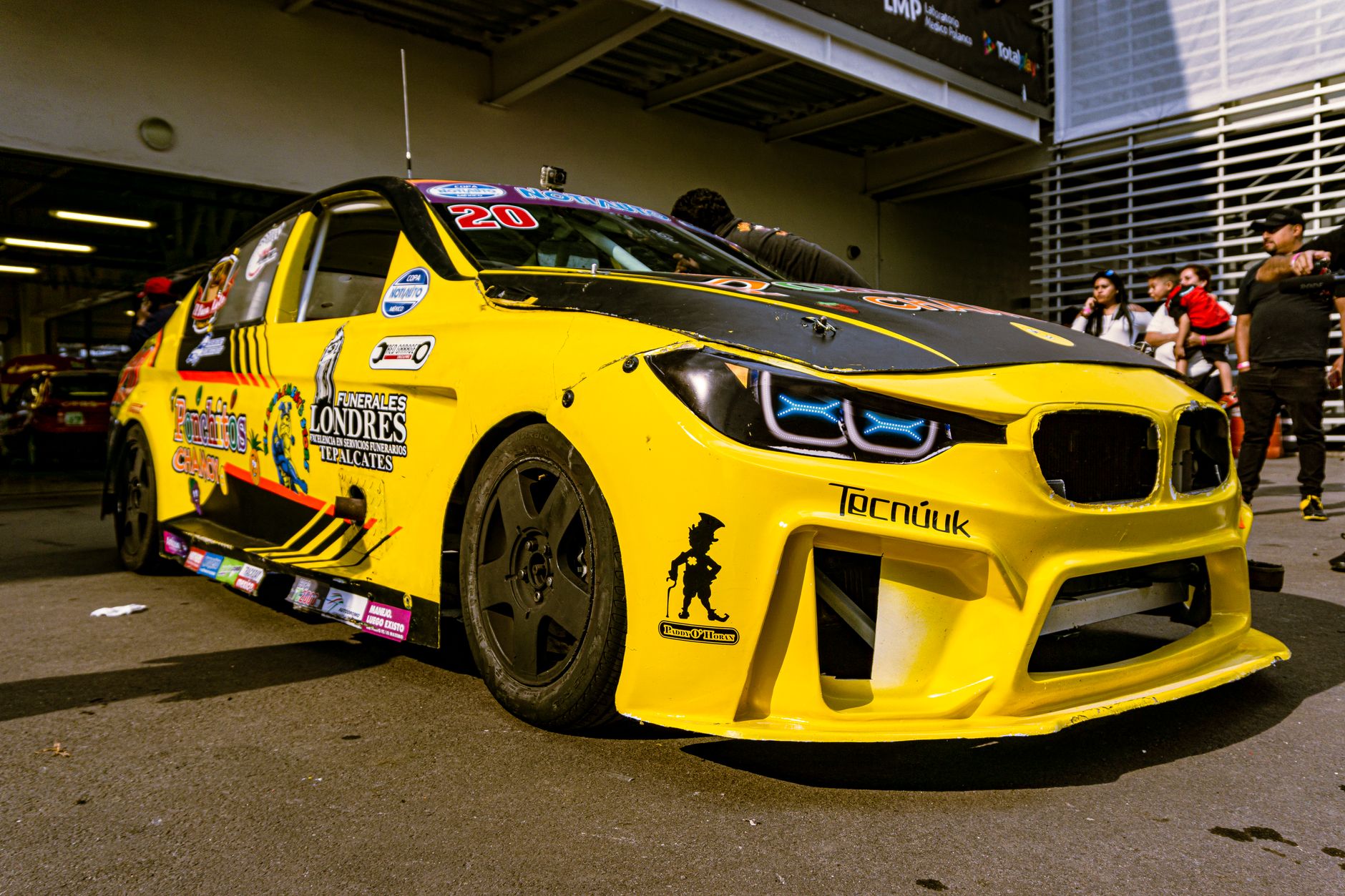
The 2026 automotive landscape is being reshaped by something few saw coming: factory-tuned hybrids and over-the-air software updates are now the baseline, not the exception. As Wheelers Family Auto Group flagged in their Top Automotive Trends for 2026, OEMs are increasingly locking down hardware potential behind software gates—meaning your stock car likely has more untapped power than a 2015 model with full bolt-ons. That’s why a cheap ECU tune before track day has become the ultimate sleeper move for budget-conscious enthusiasts who want measurable lap-time gains without measurable credit card damage.
This isn’t about chasing dyno sheets. It’s about showing up to your first (or fiftieth) HPDE with a car that responds sharper, pulls harder out of corners, and doesn’t leave you wishing you’d spent the $300 on something other than a commemorative track T-shirt.
What a Budget ECU Tune Actually Changes for Track Work
Let’s kill the myth first: a cheap ECU tune isn’t a “chip” that lies to your ECU. Modern tunes rewrite fueling, ignition timing, boost pressure (if forced induction), and torque management tables. For track day purposes, the meaningful changes happen in three zones:
Mid-range torque fill. Factory tunes often neuter torque between 3,000-4,500 RPM to protect transmissions and meet NVH targets. A track-focused budget tune restores this, meaning you exit corners in the meat of the powerband instead of waiting for a downshift.
Rev limiter and redline optimization. Many engines have 200-400 RPM of usable headroom that factory software artificially caps. On tracks with long sweepers, that extra RPM prevents an unnecessary upshift that breaks your rhythm.
Thermal management strategy. Cheap tunes from reputable vendors (more on this below) often revise cooling fan trigger points and reduce torque intervention during heat soak. On a 90°F July track day, this matters more than peak power.
Real-world example: A 2023 Civic Si with a $299 KTuner stage 1 basemap picks up 18 lb-ft at 3,500 RPM and holds power 8% longer into a session before heat pull. That’s not internet fantasy—that’s repeatable datalogging.
The $300 vs. $3,000 Question: Where Budget Tunes Actually Compromise
Honest talk: a cheap ECU tune before track day involves trade-offs. The key is knowing which ones matter for a single track day versus a season of racing.
What you DON’T get at $300:
- Custom dyno validation for your specific fuel, elevation, and modifications
- Real-time knock sensor feedback with a tuner watching
- Flex-fuel capability or aggressive timing for 100+ octane
- Warranty protection (though some tuners offer powertrain warranties for additional cost)
What you DO get:
- 90-95% of the performance gain of a $1,500 custom tune on a stock or mildly modified car
- Off-the-shelf reliability from vendors who’ve tested thousands of vehicles
- The ability to flash back to stock before dealer visits
The critical distinction: “cheap” means off-the-shelf, not sketchy. Avoid eBay “performance chips” that intercept MAP sensor signals. Avoid anyone promising 100 HP on a naturally aspirated 2.0L without supporting mods. The legitimate budget space is occupied by names like Cobb Accessport, KTuner, HP Tuners (with their growing repository of community tunes), and Euro+Drive for Fiats and Alfas.
Pre-Tune Checklist: Don’t Waste Your $300
A cheap ECU tune before track day amplifies whatever condition your car is already in. Skipping this checklist is how you turn a budget win into an expensive tow truck ride.
Maintenance non-negotiables:
- Spark plugs within 15% of replacement interval (tuned engines stress plugs harder)
- Oil changed with proper weight; verify no consumption issues
- Coolant system pressure-tested; water pump and thermostat functional
- Brake fluid fresh—tunes increase entry speeds, which increases braking demand
Hardware that plays nice with budget tunes:
- High-flow panel filter (not required, but helps if already owned)
- Cat-back exhaust (reduces backpressure that tuned turbo cars will exploit)
- Intercooler upgrade on turbo platforms (the single best companion mod for track tuning)
Hardware that demands more than a cheap tune:
- Downpipe or header changes requiring emissions disable (needs custom tuning, not OTS)
- Big turbo or supercharger upgrades
- Built internals or compression changes
Pro tip: Many track day orgs now require pre-event tech inspections. A tuned car with glowing CELs from a bad flash will fail. Always flash at least two weeks before your event and complete a 200-mile street validation cycle.
The 2026 Context: Why This Matters More Now
Remember that Wheelers trend report? OEMs are increasingly using subscription-based performance unlocks and geo-fenced power restrictions. BMW’s 2025-2026 “Power and Sound” packages and Mercedes’ EQ Boost tiering prove the model: hardware capable, software limited.
This creates a fascinating inversion for track day enthusiasts. Your 2026 model-year car might have more latent capability than a 2020 model with equivalent specs, precisely because the factory tune is more conservative to enable upsell opportunities. A cheap ECU tune before track day isn’t just unlocking power—it’s reclaiming capability the OEM intentionally withheld.
Additionally, the used car market is flooded with 2021-2023 performance cars coming off lease. These have modern turbo architectures, strong bottom ends, and depreciated prices. A $25,000 used GTI or Veloster N plus a $300 tune delivers 85% of a new $45,000 Type R’s track performance. The math is brutal for anyone buying new in 2026.
Flash Day Protocol: Doing It Right Under $300
Here’s the actual workflow that protects your engine and maximizes your track experience:
1. Research your specific engine code, not just model. A B48 BMW 2.0L responds differently than a B58 3.0L. A K20C1 (Type R) has different knock sensitivity than a K20C2 (Si). OTS tunes are engine-specific.
2. Join platform-specific forums and search “track day” + “heat soak” + the tune vendor. Reddit’s r/cartuning, model-specific Facebook groups, and TrackJunkies.org have real user data on which cheap tunes hold up during 20-minute sessions.
3. Buy the device, not just the file. Cobb, KTuner, and similar platforms include the hardware to flash and datalog. This matters because:
- You can monitor knock retard, boost pressure, and AFR in real-time
- You can flash back to stock if something feels wrong
- You can data-log your track session and share with the tune vendor for free feedback
4. Flash with a full battery, ignition on, engine off. Voltage sag mid-flash bricks ECUs. Use a battery tender.
5. Drive 50-100 miles before track day. Learn the new throttle mapping, verify no CELs, and let fuel trims adapt.
Conclusion: The Track Day Edge Hiding in Your Glove Box
A cheap ECU tune before track day won’t transform your daily into a GT3. What it will do—reliably, measurably, and for less than a set of entry-level coilovers—is sharpen the car you already own into something that teaches you more, frustrates you less, and keeps pace with drivers who spent ten times as much.
In 2026’s software-defined automotive world, the biggest performance bargains aren’t under your hood. They’re in the code running your ECU. Spend the $300 wisely, do the homework on your platform, and show up to your next track day with the confidence that your car is working with you, not holding back against you.
The stopwatch doesn’t care about your mod budget. It cares about effective horsepower, usable torque, and driver confidence. A cheap ECU tune before track day delivers all three—and leaves you money for tires, which is where the real lap times live anyway.